

What Should Heat Pump Pressure Settings Be?
Last Updated: November 17, 2026
Quick Summary
Most sealed heating systems connected to a heat pump run at around 1 to 1.5 bar when cold, though the correct figure for your property is the one your installer records. Check the heat pump pressure on the indoor unit gauge with the system off and cold, and top up if it falls below 1 bar.
A cold reading between 1 and 1.5 bar is normal and needs no action.
Top up the system slowly to 1.2 bar, then close both filling loop valves firmly.
Above 2 bar when cold means you should call an engineer.
Topping up more than twice a year points to a leak that needs diagnosis.
If the gauge reads zero, switch the system off and call an engineer.
Is your heat pump pressure reading correct?
Heatgeek Wales designs, installs and monitors MCS-certified heat pumps across Wales.
Table of Contents
What Pressure Should a Heat Pump Be Set To?
Most sealed heating systems connected to a heat pump run at around 1 to 1.5 bar when the system is cold, though the correct figure for your property is the one your installer records. Checking this reading is one of the simplest signs of system health a homeowner can monitor. This guide explains what heat pump pressure settings for UK homes should look like, how to read the gauge, and when a low reading means you need an engineer.
Pressure is not the same as temperature. It tells you how much water is inside the sealed heating circuit, not how hot the system runs. A heat pump pressure that sits steady at 1 bar cold is normal. A gauge that creeps down week after week is telling you something.
Reading the Pressure Gauge on the Indoor Unit
The gauge is usually a small dial or digital display on the indoor unit, near the filling loop. Check it when the system is off and cold. Warm water expands, so a hot system can read higher without any fault.
Here is what to look for:
Cold reading of 1 to 1.5 bar: normal, no action needed
Below 1 bar: top up the system
Above 2 bar when cold: call an engineer
Falling repeatedly: there is a leak or a fault
Take a photo of the gauge each month. A slow drop is easier to spot in a log than from memory.
Here is what the gauge reading tells you, checked with the system off and cold.
Gauge reading (cold) | What it means | What to do |
1 to 1.5 bar | Normal | No action needed |
Below 1 bar | System has lost water | Top up the system |
Above 2 bar | Too high when cold | Call an engineer |
Falling repeatedly | Leak or fault | Investigate the cause |
Zero | No water in circuit | Switch off and call an engineer |
Heat Pump Pressure Too Low: What It Means and Why It Happens
Low pressure means the system has lost water. The usual causes are a small leak, a faulty valve, or air trapped in the circuit after installation. A heat pump pressure that reads low is not dangerous on its own, but running it that way strains the compressor and can trigger a shutdown.
Common reasons for a drop include:
A weeping joint or radiator valve
A failed pressure relief valve
Trapped air bleeding out over the first few weeks
A pinhole leak in pipework under a floor
If the gauge reads zero, switch the system off and call an engineer. Do not keep running it.
How to Repressurise a Heat Pump Safely
Repressurising is a straightforward job if you follow the steps carefully.
Switch the heat pump off at the control panel
Let the system cool for at least an hour
Find the filling loop, usually two valves linked by a braided hose
Open one valve slowly, then the other
Watch the gauge and stop at 1.2 bar
Close both valves firmly
Switch the system back on and check for leaks

Never overfill. Above 2 bar cold, the pressure relief valve may open and dump water.
Safety Warning: What You Should Never Touch
Do not open the refrigerant circuit, adjust the expansion vessel, or tamper with the pressure relief valve. Refrigerant work is regulated and must be done by a qualified engineer. If you smell a sweet, faintly chemical odour near the outdoor unit, leave the area and call a professional.
Why Heat Pump Pressure Keeps Dropping
A heat pump pressure that keeps dropping points to a leak, not a topping-up problem. Topping up every few weeks masks the fault and adds fresh water, which introduces air and corrosion over time.
Watch out: repeated top-ups without finding the cause can damage the compressor and void parts of your warranty.
A pressure drop can also come from:
A pressure relief valve that is passing water
A failed expansion vessel
Corroded pipework in older properties
Our heat pump maintenance checklist covers the routine checks that catch these issues early.
Heat Pump Flow Temperature Settings vs System Pressure
Flow temperature and system pressure are two different settings, and confusing them causes real problems. Flow temperature is how hot the water leaving the heat pump is. Pressure is how much water is in the circuit.
Most UK heat pumps run best at a low flow temperature, often between 35°C and 45°C, because lower flow means better efficiency. Weather compensation adjusts that flow temperature automatically as the outside air changes. If you want to adjust yours, our guide on how to set heat pump flow temperature walks through it step by step, and our explainer on the heat pump weather compensation curve shows how the two work together.
Changing flow temperature does not change pressure. If your gauge is low, top up the water, not the temperature.
Noise, Pressure and Normal Operation: What to Expect
Some noise is normal, and knowing which sounds belong to normal operation saves a lot of unnecessary worry. A heat pump makes a low hum from the compressor, a gentle whoosh from airflow across the outdoor coil, and occasional clicking as valves open and close or the system changes mode. During a defrost cycle in cold weather you may hear a brief gurgle, a whoosh of reversing refrigerant, or a change in fan speed as the outdoor unit clears ice from its coil.
A useful way to narrow down a noise is to ask three questions: when does it happen, where is it coming from, and what mode is the system in?
Only at start-up or shut-down: clicking and light clunking from valves and relays is common and rarely a fault. Persistent banging at start-up points to pipework that is not properly clipped or is touching a wall or joist.
Only during defrost: gurgling, whooshing and fan speed changes are normal. If the noise continues long after the ice has cleared, or the outdoor unit stays iced over, book a service.
Constant low hum from the outdoor unit: compressor hum is normal, but a hum you can hear clearly inside a neighbouring room may point to poor anti-vibration mounting or siting too close to a boundary.
Indoor unit only: ticking or dripping indoors usually means trapped air, a loose panel or a condensate drain issue rather than a refrigerant fault.
Outdoor unit only, high-pitched: squealing suggests worn motor bearings, while grinding suggests a failing fan motor or debris striking the blades.
Hissing near the outdoor unit: this can indicate a refrigerant leak and should be treated as a reason to call an engineer rather than investigate yourself.
Measured sound levels help set realistic expectations. Manufacturers usually quote a sound power level for the outdoor unit, and the figure you actually hear at a boundary is lower and depends heavily on distance, fencing, walls and how the unit is mounted. A unit rated quietly on paper can still seem loud if it sits on a hard surface against a reflective wall.
A noisy system with steady pressure is usually a mechanical or installation issue, not a water one. If the gauge is also drifting, treat the pressure fault first. Our guide to heat pump noise causes and fixes explains each sound and the safe checks you can make, and our heat pump maintenance checklist covers the routine checks that prevent many of them.
When to Call a Qualified Technician
Not every pressure reading needs the same response. Sorting the situation into monitor, book a service, or seek urgent help makes the decision much clearer.
Monitor and log. A gauge that sits steady between 1 and 1.5 bar cold, with no repeated topping up, needs nothing more than a monthly photo and a note of the reading. Small seasonal variation is normal.
Book a service visit. Call an engineer if you top up more than twice a year, if the pressure falls steadily over weeks, if the gauge reads above 2 bar when cold, or if you hear hissing near the outdoor unit. These point to a leak, a passing pressure relief valve, a failed expansion vessel or a refrigerant issue that needs proper diagnosis rather than another top-up.
Seek urgent help. Switch the system off and call an engineer if the gauge reads zero, if water is visibly escaping, if the pressure relief valve is discharging continuously, or if you smell a sweet, faintly chemical odour near the outdoor unit. Do not keep running the system in these cases.
There is a clear line between what a homeowner can safely check and what must be left to a qualified technician.
On siting and neighbour considerations, the outdoor unit should sit where its noise is least likely to disturb others, away from bedroom windows and boundaries where practical, on a stable base with anti-vibration mounting, and with the fan clear of fences and walls.
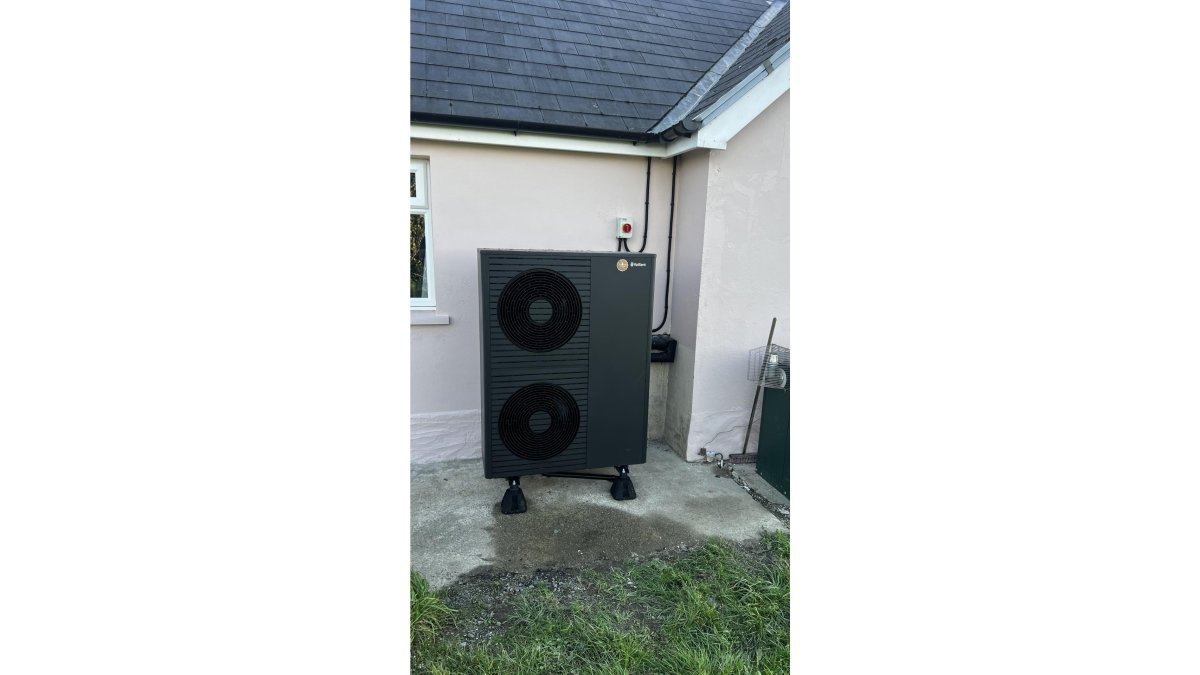
Our engineers are MCS-certified and install Vaillant aroTHERM heat pumps with data-backed designs. Our systems are monitored remotely, so pressure and performance issues can be spotted before they become breakdowns.
Book Your Free Heat Pump Survey
If you contact us directly, we carry out the survey for free, saving you £250. Read our guide on what happens during a heat pump survey to see exactly what we check.
Getting heat pump pressure settings right is the difference between a system that runs quietly for years and one that keeps losing water and costing you money. Heatgeek Wales designs and installs MCS-certified air source heat pumps with data-backed heat loss surveys, 24/7 remote monitoring, and ongoing optimisation. Get started with Heatgeek Wales and keep your system performing at its best.
Frequently Asked Questions
What pressure should a heat pump be set to?
Most sealed heating systems connected to a heat pump run at around 1 to 1.5 bar when cold. Your installer should record the correct figure for your property. Check the gauge when the system is off and cool, because pressure rises as water heats and expands. If the reading sits outside the range your installer specified, that is the point to investigate rather than guess.
Can I top up the pressure on a heat pump myself?
Topping up via the filling loop is usually a straightforward homeowner task if your installer has shown you how. Attach the loop, open the valve slowly, watch the gauge and stop at the target figure. Never leave the loop connected afterwards. Repressurising repeatedly is a different matter: if heat pump pressure keeps dropping, there is a leak or a component fault that needs a qualified technician, not another top-up.
What is the difference between heat pump pressure and flow temperature?
System pressure is the water pressure inside the sealed heating circuit, measured in bar on the gauge. Flow temperature is how hot the water leaving the heat pump is, measured in degrees, and it is set on the controller. They are separate settings. Low pressure affects whether the system runs at all; flow temperature affects how much heat reaches your radiators and how efficiently the heat pump runs.
When should I call an engineer about heat pump pressure?
Call an engineer if the gauge falls below the minimum your installer specified, if you have to repressurise more than once or twice a season, if you see water near the indoor unit, or if pressure climbs too high. Also call if the system locks out with a pressure fault after a top-up. These point to leaks, expansion vessel faults or valve problems that need proper diagnosis rather than repeated topping up.


Comments