

7 Heat Pump Planning Permission Requirements You Must Check
Last Updated: November 4, 2026
Quick Summary
Most domestic air source heat pump installations need no planning permission because they fall under permitted development rights, provided the property is a house, only one unit is installed, and the siting and noise conditions are met. Heat pump planning permission requirements are stricter for flats, listed buildings and conservation areas, where a full application is often needed.
Flats and maisonettes are excluded from the domestic permitted development route for heat pumps.
A unit mounted on a wall or roof facing a road or public footpath fails the siting condition.
The MCS 020 noise assessment must use the manufacturer's declared sound power data for the exact model.
Quiet rural locations can need more careful siting because lower background noise makes the unit stand out.
Listed building consent is a separate application from planning permission and may be required.
Table of Contents
Do You Need Planning Permission for a Heat Pump?
Most domestic air source heat pump installations do not need planning permission, because they can fall under permitted development rights. That is the short answer, and it holds for most domestic installations.

Heat pump planning permission requirements are the set of conditions a domestic installation must satisfy to proceed without a formal planning application. Get them right and the project moves straight to scheduling. Get one wrong and you are looking at a full application, added cost and months of delay.
Below, we set out the seven checks that decide which route your property takes, with the specific conditions that catch people out.
When Permitted Development Usually Applies
Permitted development is the national grant of planning permission for specified minor works. Whether it applies to a heat pump depends on the property type and whether the installation meets every qualifying criterion; check the current rules with your local planning authority.
Three conditions do most of the work:
The property is a house and is not a flat or maisonette
No more than one heat pump unit is installed at the property
The unit complies with the noise limit and siting rules set out below
If all three are satisfied, you can install, alter or replace an air source heat pump without submitting a planning application.
When You Will Need a Full Application
You need a full planning application when any single criterion fails. The most common triggers are:
The property is a flat or a block of flats
The unit would sit on a wall or roof facing a road or public footpath
The building is listed, or sits in a conservation area where local restrictions bite
An existing heat pump is already installed and you want a second unit
A planning condition on the property removes permitted development rights
That last point catches people out. Many newer estates have conditions attached to the original consent that strip permitted development rights entirely. Check your title documents and any decision notice before assuming you qualify.
Permitted Development Rights for Heat Pumps: The Qualifying Criteria
Permitted development rights for heat pumps are conditional, not automatic. The conditions split into two groups: what the property is, and where and how the unit is installed.
Property Type and Installation Limits
The rules distinguish sharply between property types. A detached house has the widest scope.
Flats and maisonettes are excluded from the domestic permitted development route for heat pumps. If you own a flat, the installation needs a planning application, and if the building is a block of flats you will also need to consider the freeholder's consent.
Unit numbers are one of the conditions to check. Whether replacing an existing heat pump counts as permitted development depends on meeting the current conditions; check with your local planning authority.
Siting, Boundary and Volume Conditions
Siting relative to roads and public footpaths is one of the conditions that can require an application.
Volume limits apply to the unit itself. The external unit must stay within the size limits set for domestic installations under the current rules. If your proposed unit exceeds them, permitted development may not apply.
Distance from the property boundary matters too. The closer the unit sits to a neighbour's boundary, the more likely it is that the noise assessment becomes the deciding factor rather than the siting rules.
Heat Pump Noise Assessment: Meeting the MCS 020 Standard
Noise is where most borderline installations are won or lost. The MCS 020 standard is a recognised method for assessing heat pump noise, and local planning authorities commonly ask for an assessment of this kind.
In practice, three variables decide the outcome:
The sound power level of the specific unit, which varies between models
The distance from the unit to the nearest neighbour's window or assessment position
The background noise level in the area, which is higher in urban locations and lower in quiet rural settings
A common mistake is assuming a quiet rural location helps. It does the opposite. Lower background noise means the heat pump's contribution stands out more, so rural properties sometimes need more careful siting than suburban ones.
Use the manufacturer's declared sound power data for the exact model being fitted, as an assessment based on the wrong specification may not hold up if a complaint is raised.
Planning Permission in a Conservation Area or Listed Building
Planning permission in a conservation area or for a listed building is a different question from the permitted development test, and it is where the most expensive mistakes happen.
For a listed building, permitted development rights may not apply.
In a conservation area, the position is more nuanced. Local restrictions such as Article 4 directions can remove permitted development rights in specified areas, so check with the local planning authority (When are permitted development rights removed?).
Older and protected properties bring their own practical questions. Our guide to whether heat pumps work in old cottages covers insulation, radiator sizing and flow temperature for solid-wall and period homes.
How the Rules Differ Across the UK Nations
The permitted development framework for heat pumps is not identical across the UK, and assuming otherwise is a reliable way to get an application rejected.
Permitted development rules differ between the nations of the UK, so guidance written for one nation may not apply to a property in Wales.
Check which nation any guidance describes before relying on it. If you are reading a forum post or a supplier's blog, check which nation it is describing before relying on it.
Applying for Planning Permission: Process, Documents and Timescales
A planning application for a heat pump is a householder application, submitted to the local planning authority for the area. The process is manageable, but the documentation needs to be right first time, because a validation query adds weeks before the case is even allocated to a case officer.
The application sequence
The practical order of events is:
Confirm the route. Run the permitted development checks first. If any criterion fails, you are in application territory and should plan accordingly.
Commission the noise assessment. The MCS 020 assessment must use the manufacturer's declared sound power data for the exact model being fitted, at the exact proposed position. Do this before drawings are finalised, because the result may move the unit.
Prepare the drawings. Location plan, site plan and elevation drawings showing the unit, its mounting and any screening. Drawings must be to a recognised scale and show the property boundary and the nearest neighbouring windows.
Complete the householder application form and submit with the fee. Householder applications attract a fee; check the current fee schedule with the planning authority before submitting.
Validation. The authority checks the submission is complete. Missing plans, an absent noise assessment or an unclear site plan are the usual reasons a case is held at validation.
Determination. Determination periods vary, and cases involving listed buildings or conservation areas can take longer; confirm the expected timescale with the local planning authority.
Documents you will typically need
A completed householder application form submitted to the local planning authority
Location and site plans showing the property, the boundary and the proposed unit position
Elevation drawings showing the unit and any screening
The MCS 020 noise assessment for the proposed unit at the proposed position
A heritage statement if the property is listed or in a conservation area
The manufacturer's specification confirming the unit's sound power level and dimensions
A covering letter explaining why the installation is acceptable, particularly where the unit is visible from a road or public footpath
Watch out: an application that omits the noise assessment, or supplies one calculated for a different model or a different position, is the single most common reason a straightforward householder case stalls at validation.
What happens after a decision
If permission is granted, the decision notice will usually attach conditions. Conditions may cover the unit's position and appearance, and screening. Read the conditions before ordering equipment, because a condition that fixes the unit to a specific elevation removes any flexibility later.
If permission is refused, the decision notice will state the reasons. Refusals can relate to visual impact, noise or heritage harm. Options include an appeal or amending the scheme and reapplying.
Funding may be available to offset part of the project cost. Our guide to heat pump grants explains the eligibility criteria and application process for the schemes currently open. If you are mapping out the whole project, the heat pump installation timeline sets out what happens from survey through to commissioning.
Common Compliance Mistakes and How to Avoid Them
The same handful of errors commonly cause compliance problems. Each is avoidable with a check before work starts.
Mistake | Why it matters | How to avoid it |
Assuming permitted development applies | A failed criterion means the installation is unauthorised | Run all seven checks before ordering equipment |
Ignoring a planning condition on the property | Conditions can remove permitted development rights entirely | Read the title documents and original decision notice |
Using the wrong sound power figure | The noise assessment will not hold up if challenged | Use the manufacturer's declared data for the exact model |
Mounting the unit on a street-facing wall | This fails the siting condition outright | Site the unit on a side or rear elevation |
Skipping listed building consent | Works without consent are a criminal offence | Apply for consent separately from planning permission |
Using a non-certified installer | Grant eligibility and sign-off both depend on certification | Verify the installer's certification before appointing |
The installer point deserves emphasis. Our guide to MCS certified heat pump installers explains how to verify certification and what it means for grant claims. A non-certified installation can leave you ineligible for funding and without the documentation a future buyer's solicitor will ask for.
Book Your Free Heat Pump Survey and Eligibility Check
The checks above help establish whether a planning question needs addressing before equipment is ordered. If you contact us directly, we will carry out the survey for free, saving you £250.
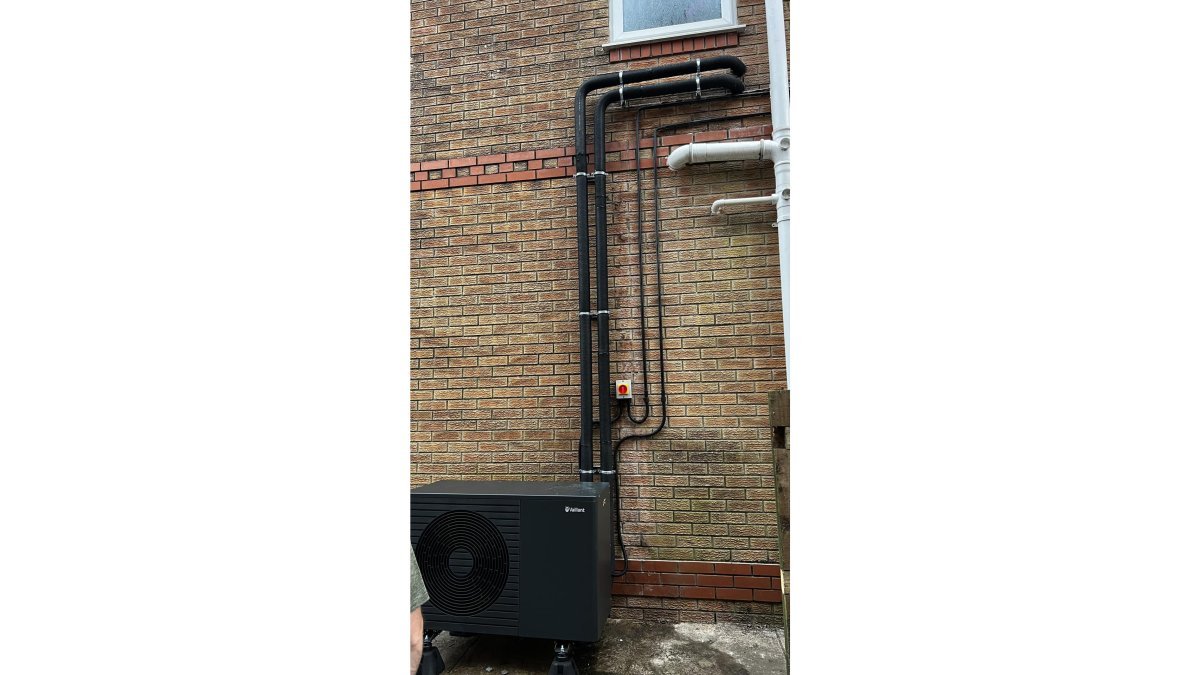
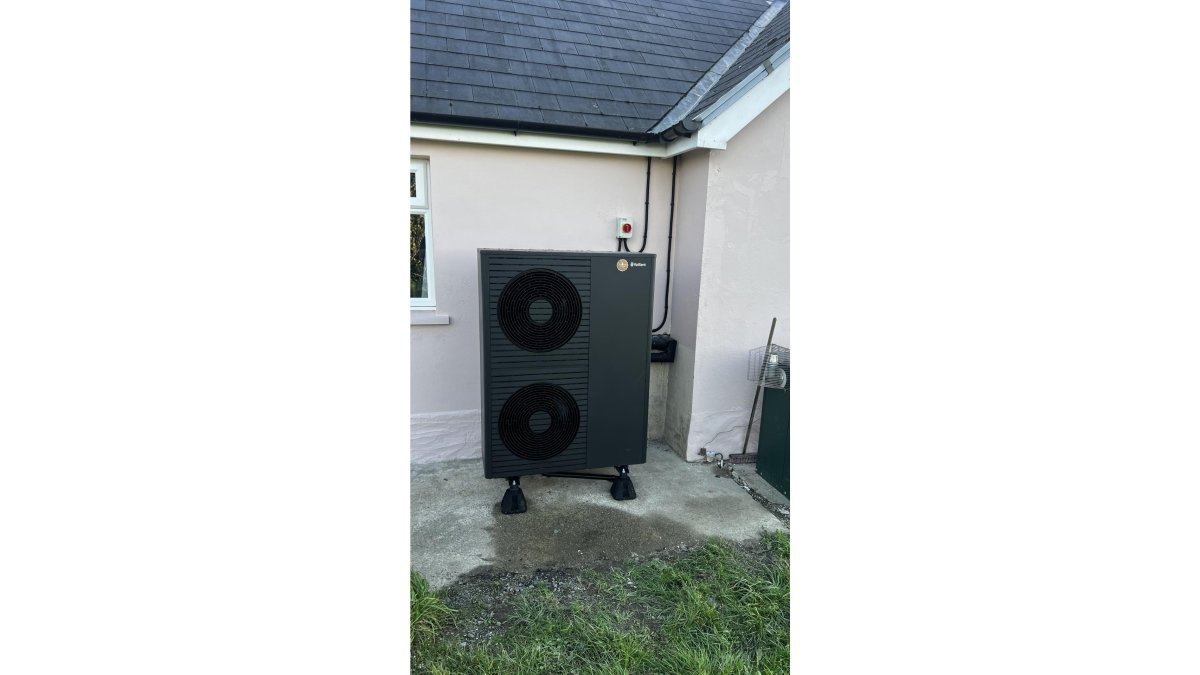
Our MCS certified engineers can assess your property and confirm whether permitted development applies or an application is needed. We install Vaillant aroTHERM heat pumps, design systems using data-backed heat loss surveys, and provide 24/7 remote system monitoring.
If you want to know what the visit involves before you commit, read what happens during a heat pump survey.
Frequently Asked Questions
Is an air source heat pump considered permitted development?
In many cases, yes, but it depends on the property and the installation. Permitted development rules have conditions covering factors such as noise, unit size, siting and property type. Your local planning authority can confirm whether your specific property qualifies before work begins.
What are the noise requirements for heat pump planning permission?
Noise is an important consideration. A noise assessment, such as one following the MCS 020 method, can compare the unit's expected noise at the nearest neighbouring property against the background level. Your local planning authority can advise what evidence it expects.
Do I need planning permission for a heat pump in a conservation area?
Permitted development rights can be more restricted in conservation areas and for listed buildings. Even where permitted development might otherwise apply, the local planning authority may consider visual impact and materials. Check with the authority early.
What happens if my heat pump installation does not meet permitted development criteria?
If an installation does not meet the permitted development conditions, a planning application may be needed. Installing without permission when one is required can lead to enforcement action. An MCS-certified installer can help check compliance before fitting, and if you contact Heatgeek Wales directly we will carry out the survey for free, saving you £250.

Comments